
 India
India
 Europe
 France
 Germany
 UAE
UAE
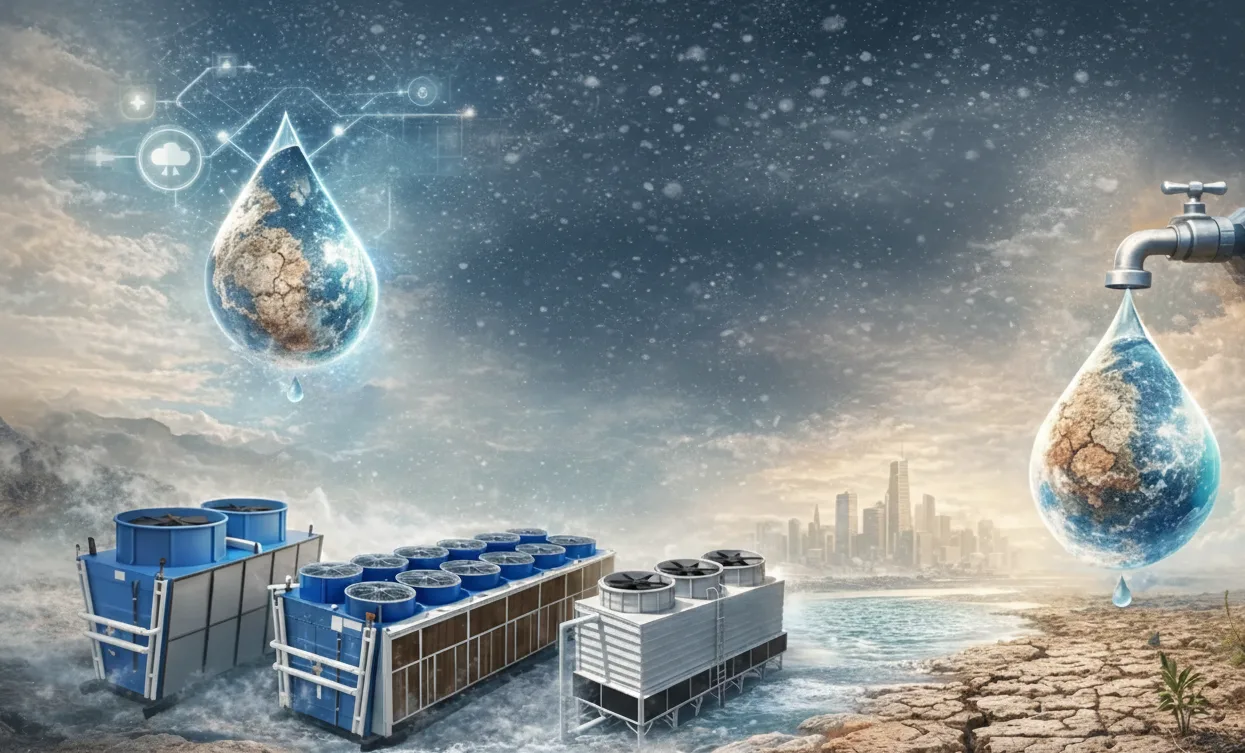
How Intelligent, Low-Water Cooling Technologies Are Redefining Industrial Sustainability
Industrial cooling towers have quietly become one of the most critical sustainability levers in modern infrastructure. What was once a simple heat-rejection system is now at the center of water conservation, energy efficiency, and climate responsibility.Introduction: Cooling Is No Longer Just About Heat
Industrial cooling towers have quietly become one of the most critical sustainability levers in modern infrastructure. What was once a simple heat-rejection system is now at the center of water conservation, energy efficiency, and climate responsibility.
As industries expand across data centers, power generation, manufacturing, and HVAC, the challenge is clear:
How do we cool more — while using less water and energy?
This question is driving a global transformation in cooling tower design, materials, and control intelligence.
Global Cooling Tower Industry: Where the Market Is Heading
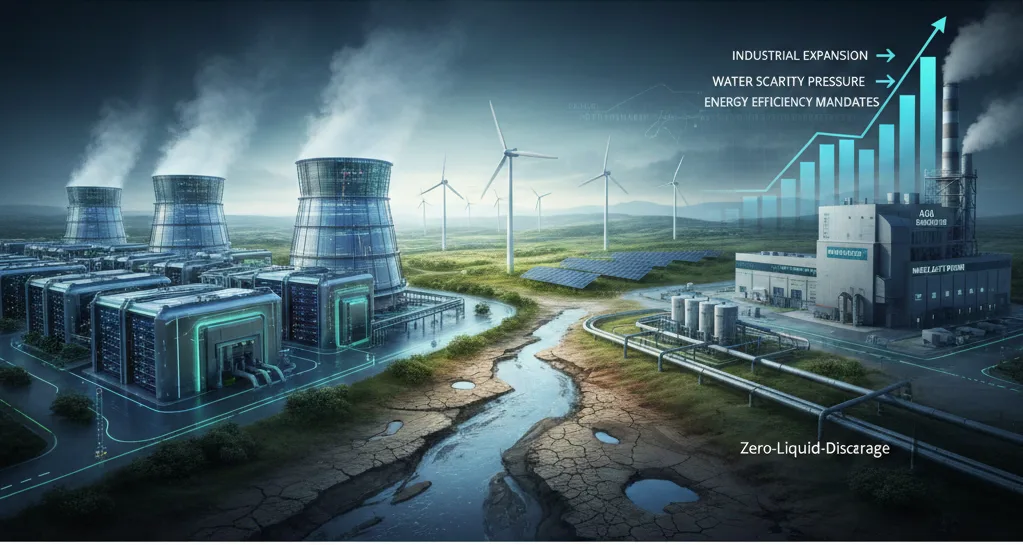
The worldwide cooling tower industry is entering a new growth phase, driven by three unstoppable forces:
- Industrial Expansion: Rapid growth of data centers, Increased power generation capacity and Large-scale manufacturing in Asia, Middle East, and Africa.
- Water Scarcity Pressure:Water usage regulations tightening globally, Rising cost of industrial water sourcing and Zero-liquid-discharge (ZLD) policies in many regions
- Energy Efficiency Mandates:Carbon reduction targets, ESG reporting requirements and Lifecycle cost optimization .
- Modular Design: Prefabricated, scalable modules allow for rapid deployment and easy expansion as data center needs grow.
According to recent studies, data centers implementing advanced adiabatic cooling systems report average PUE (Power Usage Effectiveness) improvements from 1.6 to 1.15, translating to millions in annual energy savings for large-scale facilities.
Why Conventional Cooling Towers Are Being Re-Evaluated
Traditional evaporative cooling towers have served industries well — but they come with limitations:
- High water evaporation losses
- Blowdown and drift losses
- Dependency on water availability
- Rising chemical treatment costs
In water-abundant regions, this may still be manageable. But in water-stressed and climate-sensitive zones, industries are actively searching for alternatives.
The Rise of Water-Efficient Cooling Technologies
Adiabatic Cooling Towers: Smart Use of Water
Adiabatic cooling systems operate primarily as dry coolers, using water only when ambient conditions demand it.
Key advantages:
- Water usage only during peak temperatures
- Significant reduction in annual water consumption
- Improved energy efficiency during hot conditions
- Lower operating cost over lifecycle
Dry Cooling Towers: Cooling Without Water Loss
Dry cooling towers eliminate evaporation entirely.
Why industries adopt dry cooling:
- Near-zero water consumption
- No plume formation
- Minimal chemical treatment
- Compliance with strict environmental regulations
Intelligent Cooling: When Software Meets Hardware
Modern cooling towers are no longer passive equipment.
They are becoming intelligent thermal systems, integrating:
- Sensors for temperature, flow, and pressure
- Intelligent water spray control
- Climate-responsive operation logic
- Predictive maintenance insights
Materials & Engineering: Built for the Next 25 Years
Durability is now a core decision factor.
Advanced cooling towers increasingly use:
- Corrosion-resistant metals
- High-performance coils
- Optimized heat-exchange surfaces
- Modular construction for scalability
The focus is no longer just performance on day one — but stable performance over decades.
Cooling Towers as Climate Infrastructure
Cooling technology directly impacts:
- Water ecosystems
- Energy grids
- Industrial carbon footprint
That is why forward-looking manufacturers design cooling towers not just as products — but as climate-adaptive infrastructure.
This mindset aligns with:
- Government sustainability initiatives
- Green financing programs
- Global climate partnerships
- ESG-driven procurement
The Camel Principle: Nature’s Blueprint for Cooling
A camel survives extreme desert heat by:
- Retaining water efficiently
- Using it only when necessary
- Adapting to climate conditions dynamically
Modern cooling towers are evolving in the same way.
Inspired by nature. Engineered for the future.
This philosophy defines the next generation of cooling solutions.
Conclusion: The Future Belongs to Intelligent, Water-Wise Cooling
The cooling tower industry is undergoing a fundamental shift:
❌ From water-intensive systems To ✅ intelligent, adaptive, low-water technologies
Companies that invest today in:
- Adiabatic systems
- Dry cooling solutions
- Smart controls
- Sustainable engineering
will lead the industry tomorrow.
Cooling is no longer just about heat removal — it is about responsible performance in a changing world.
Join the Discussion
Leave a Comment