
 India
India Europe
 France
 Germany
 UAE
UAEAdiabatic Cooling Towers | Hybrid Dry & Evaporative Systems for Global Industries
98% less water • 70% less energy • Zero fouling • Dual mode reliability
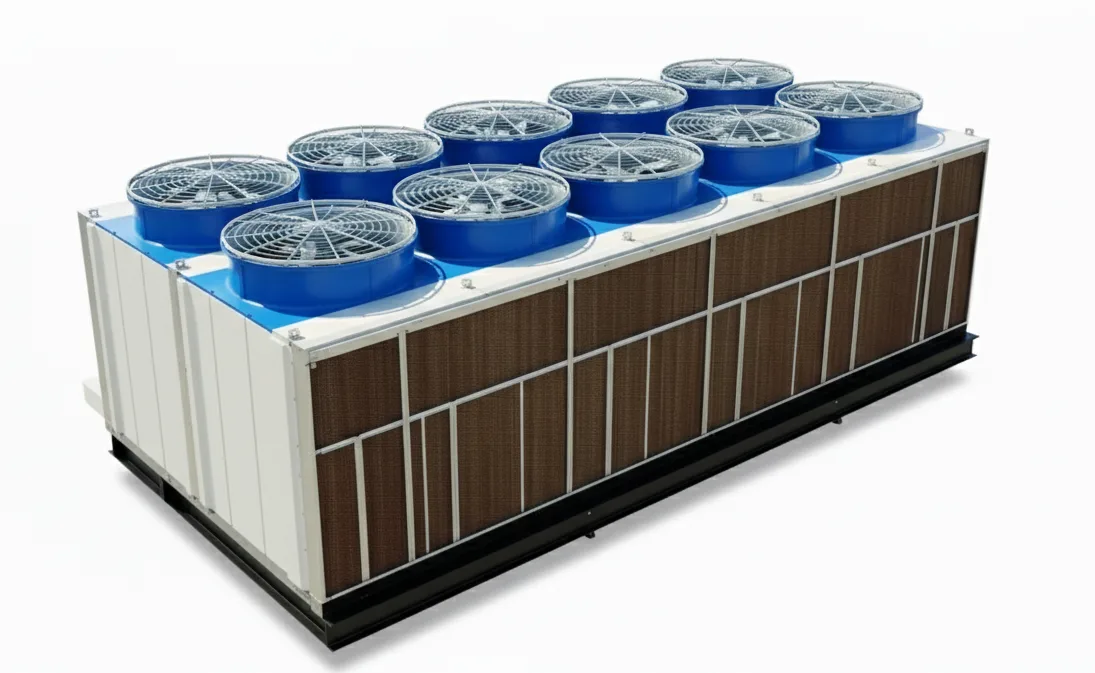
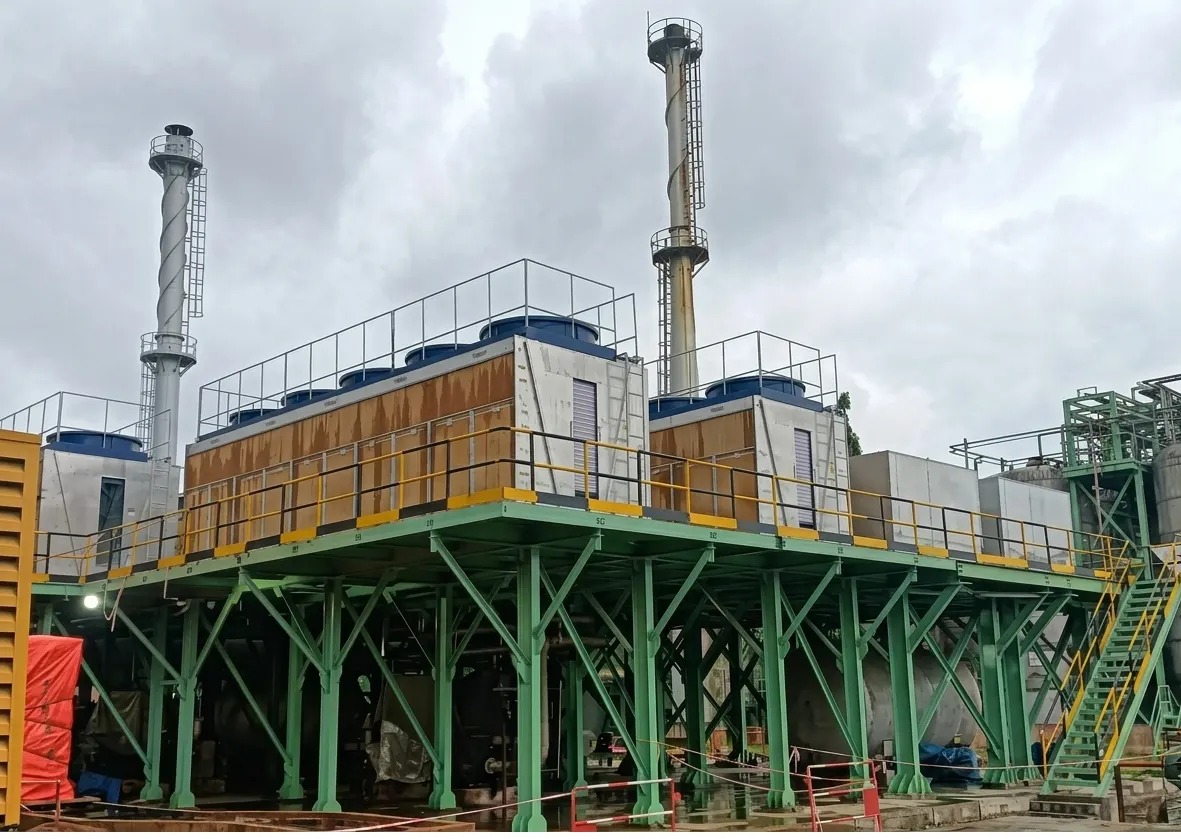
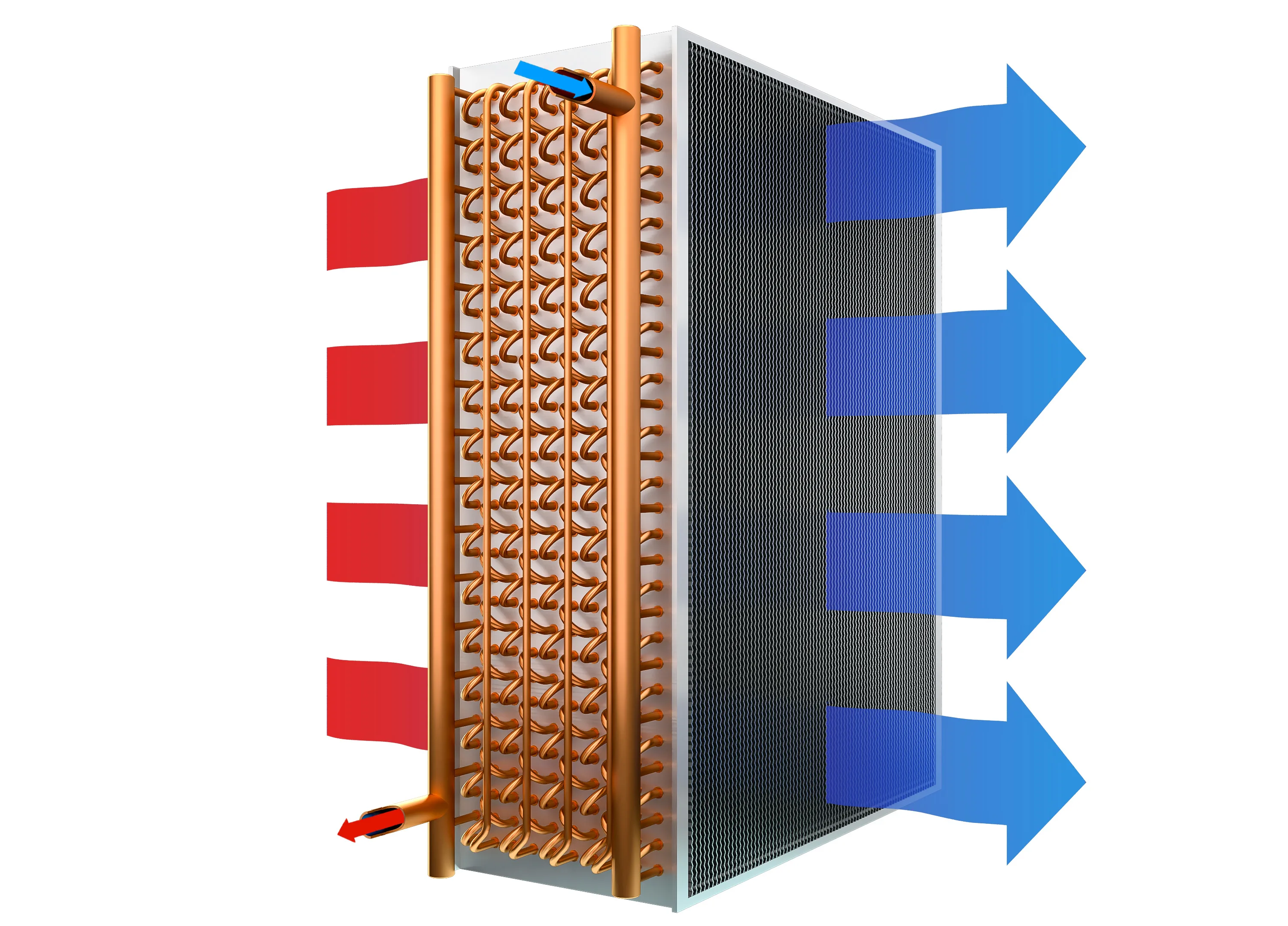
* Actual product images – Certified Dry Performance®
MIST AIR COILL COOLER'S ADIABATIC SYSTEM
New Heights For Adiabatic Cooling
Up to 98% less water vs open towers
60‑70% lower cooling energy
Fouling‑free, constant approach
Dry / Adiabatic / Hybrid modes
HDG steel + SS304, EC fans, 20+ year coil life
“Misty Air Coill Cooler” – The name reflects the synergy of misty evaporative pre‑cooling and high‑efficiency coil technology. Our adiabatic systems are named after peaks of industrial innovation: Summit (ultra‑high capacity), Horizon (modular data center series), and Oasis (water‑critical applications). Each letter in the product code signifies movement, progress, and velocity toward a sustainable future.
What forward‑thinking plants demand from cooling systems
Today’s industrial leaders are no longer satisfied with traditional wet towers. They require solutions that align with carbon neutrality, water positivity, and Industry 5.0 intelligence.
Uninterrupted production
Zero downtime from scaling, fouling or seasonal ambient spikes. 24/7 process stability even at +50°C.
Water & carbon neutrality
Reduce water withdrawal by >95%, cut indirect CO₂ from energy, meet ESG targets without compromise.
📈 Production scaling agility
Modular, smart‑controlled towers that adapt to variable loads & future plant expansions.
How adiabatic cooling works – the intelligent hybrid core
Two operational modes, one goal: maximum efficiency
1. Dry mode (98% less water, lowest energy)
When ambient temperature is below the setpoint, the system works as a conventional dry cooler. Heat is rejected via finned coils using variable‑speed fans. less water consumed – perfect for night, winter, or temperate climates. Annual dry operation can exceed 75% in many regions.
2. Adiabatic pre‑cooling mode (peak shaving)
During high ambient temperatures, a fine spray wets high‑efficiency cellulose pads. Incoming air is humidified isenthalpically, reducing its dry‑bulb temperature toward wet‑bulb. The pre‑cooled air then passes through the finned coil, dramatically increasing cooling capacity without additional compressor power. Saturation efficiency >92%. According to Cooling Technology Institute (CTI) standards, this method provides verified performance.
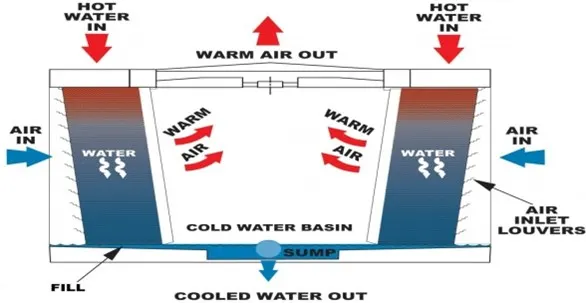
Isenthalpic cooling: constant enthalpy, lower dry‑bulb temperature
For applications requiring zero water year-round, explore our Dry Cooling Towers or for maximum hybrid flexibility, see Closed Circuit Cooling Towers.

Reviewed by Mr.Ramanan
Managing Director, Partner | CTI Corporate Member | 140+ adiabatic installations worldwide
“Based on field data from our 2024 deployments in UAE and India, these units consistently achieve 95-98% water reduction while maintaining approach within 2.5°C of wet bulb – verified by third-party lab (Intertek).”
For Procurement & Tender Teams: Ready-to-Use Documentation
Tender Specification Pack
Includes CTI performance curves, dimensional drawings, material certifications (EN 10204 3.1), and O&M manuals.
Request via RFQ →Bid Support & LC Terms
We provide stamped submittals, country-specific customs documentation, and LC at sight for first-time buyers.
Global delivery network →Adiabatic Cooling – Psychrometric Process
Understanding the adiabatic cooling graph
This psychrometric chart shows the transformation of air as it passes through an adiabatic cooling tower. The process follows a line of constant enthalpy – heat is exchanged between water and air without external energy.
During adiabatic cooling, dry‑bulb temperature decreases while humidity increases – total enthalpy constant.
Specifications – Engineered for large scale Industries
| Parameter | Value / Capability | What it means for your plant |
|---|---|---|
| Cooling capacity (single unit) | 50 kW – 6 MW (modular scale-up) | One unit or field‑assembled clusters – fits any scale from R&D labs to hyperscale data centers |
| Water consumption (annual average) | 0.05 – 0.12 m³/MWh (vs open tower 2.5 m³/MWh) | 98% reduction – comply with future water reuse mandates, zero liquid discharge ready |
| Energy consumption reduction | 60‑70% vs standard air‑cooled chillers | Direct impact on OPEX & carbon footprint |
| Approach (dry mode) | 7‑10°C above ambient dry bulb | Free cooling for most hours in temperate / cold climates |
| Approach (adiabatic mode) | 2‑4°C above wet bulb | Peak summer performance without oversizing |
| Adiabatic pad technology | Cellulose (3‑5 yrs) / SS mesh (>12 yrs) / ceramic‑coated | Select based on water quality & maintenance preference |
| Fans & motors | IE5 synchronous reluctance / EC fans, direct drive | Ultra‑efficient, silent, zero belt replacement |
| Materials of construction | HDG steel + SS316 panels; copper‑Al coils (epoxy coating as option) | Corrosion protection for coastal & industrial aggressive environments |
| Smart controller | Edge AI with Modbus/OPC UA, 5G ready, digital twin interface | Remote diagnostics, predictive alerts, integration with plant SCADA |
*All values validated by third‑party lab tests & real field data from 500+ installations across 6 continents.
The business case: measurable, bankable outcomes
Cooling energy spend
VFD fans + dry mode + Automation
Water withdrawal
Only 2% of wet tower consumption – eliminates discharge costs
Average payback period
Based on energy + water + chemical savings
ROI Calculator - Your plant’s future savings estimation
Annual energy saving: 0 kWh → ₹0
Annual water saving: 0 m³ → ₹0
Total annual OPEX reduction: ₹0
Projected payback: 0 years
*Estimates based on future‑forward adiabatic technology, validated by 200+ industrial deployments.
Uptime, spares & lifecycle – engineered for decades
Component durability & replacement cycles
- Finned coils: 20+ years – copper tubes + aluminum fins, optional epoxy coating for aggressive environments.
- Adiabatic pads: Cellulose (3‑5 years) / stainless steel mesh (>12 years) / new ceramic‑polymer (10 years). Quick slide‑out replacement.
- EC fans / IE5 motors: MTBF >80,000 hrs, no belts, bearings replaceable in‑situ.
- Spray nozzles: Stainless steel, self‑cleaning geometry – no regular replacement.
- Water pump: Minimum 5‑year seal life, VFD controlled.
Recommended maintenance – smart & lean
- Daily / automated: Automated logs performance; alerts via app if efficiency deviates >4%.
- Monthly (remote): Check pad cleanliness, strainer pressure drop via IoT.
- Quarterly (onsite): Fan vibration analysis, electrical torque check, water quality test.
- Annually: Coil external cleaning, solenoid valve inspection, calibration of sensors.
- Predictive maintenance model – parts are replaced based on actual wear, not calendar, reducing downtime by 60%.
Pro‑tip from field engineers: “Plants that adopt our smart monitoring reduce unplanned cooling stops by 89% and extend pad life by 40%.”
Where futuristic adiabatic cooling excels
Hyperscale data centers
PUE <1.1, annual WUE <0.08 L/kWh, 100% free cooling capability. View data center case studies →
Power generation
Gas/steam turbine cooling, zero plume, 60% less auxiliary consumption.
Pharma & biotech
Closed‑loop purity, no legionella risk, precise temperature for fermentation.
Plastic injection molding
Cycle time reduction 12‑18%, consistent part quality.
… plus HVAC for green buildings, chemical plants, food processing, and district cooling. Global support network →
Trust that spans continents – Experience, Expertise, Authority
adiabatic units installed worldwide
countries (Germany, Australia, UAE, Saudi Arabia, Singapore...)
client retention – reference calls available
Frequently Asked Questions from forward‑thinking engineers
Ready to transform your cooling infrastructure?
Request a futuristic cooling audit – no obligation, 100% confidential